
Intel AB28F400BRB80: A Deep Dive into the 4-Megabit Boot Block Flash Memory Chip
In the landscape of late 1990s and early 2000s computing and embedded systems, the Intel AB28F400BRB80 stood as a pivotal component for firmware storage. This 4-megabit (512KB) Boot Block Flash memory chip was engineered for a critical purpose: to reliably store and execute the foundational code that initializes hardware—the boot code.
The architecture of the AB28F400BRB80 is its most defining feature. Unlike conventional flash memories with uniform sectors, it employs an asymmetric boot block architecture. This design physically partitions the memory array into distinct sections:
A small, locked-down boot block (typically 16 KB) at the top or bottom of the address space.
Several larger, main blocks for storing the main application code, operating system, or data.
This physical separation is crucial. The boot block is designed to be individently erasable and lockable, meaning it can be permanently write-protected. This ensures that the critical boot code remains intact and immune to accidental corruption during firmware updates or power failures in the main memory areas. It provided a robust fail-safe mechanism, guaranteeing the system could always boot into a recovery mode even if a main firmware update failed.
Fabricated on Intel's advanced 0.23 micron MirrorBit™ process technology, this chip offered significant advantages. This technology enabled a more compact cell size, contributing to cost-effectiveness and higher production yields. The "BRB80" suffix indicates its key performance characteristic: a 70 ns maximum access time for rapid code execution and a standard single +5V ±10% power supply operation, simplifying board design by eliminating the need for additional voltage regulators.
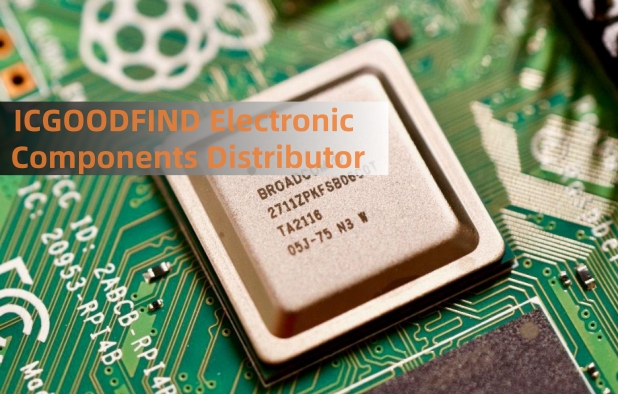
Operating the chip involved a command-driven interface. By writing specific sequences to its internal command register, the system could perform sector erase, chip erase, program, and read operations. Its compatibility with the JEDEC-standard pinout made it a second-sourceable part, allowing designers to substitute it with equivalent chips from other manufacturers, reducing supply chain risk.
The primary application of the AB28F400BRB80 was in embedded systems where reliability was paramount. It was a cornerstone in:
Network routers, switches, and modems.
Motherboard BIOS chips for PCs and servers.
Automotive control units and industrial automation systems.
Telecommunications infrastructure equipment.
Its legacy lies in providing a hardened, secure, and dependable storage solution for the most vital software in a system, bridging the era when firmware moved from ROM to reprogrammable flash memory.
ICGOODFIND: The Intel AB28F400BRB80 was a foundational boot block flash memory chip that established a benchmark for system reliability through its asymmetric sector architecture, hardware lockout protection for the boot sector, and industry-standard compatibility, making it an indispensable component in mission-critical embedded systems of its time.
Keywords: Boot Block Flash Memory, Asymmetric Architecture, Firmware Storage, Embedded Systems, Intel MirrorBit™ Technology

